






Business Logic |

CMS Engineering |

Frontend |

Engineering |
I’m Fardad Arman, a full-stack engineer focused on building business-oriented web systems, administration platforms, CMS solutions, and polished user interfaces.
My strongest areas are Django/Python backend engineering, WordPress/PHP engineering, database-driven application architecture, and Tailwind-based frontend implementation.
I care about the structure behind the interface: clear models, predictable workflows, maintainable code, reliable admin tools, testable behavior, and a development process that can survive future changes.
| Area | What I work on |
|---|---|
| Business Platforms | CRMs, dashboards, booking systems, workflow-driven applications and internal tools |
| Django Engineering | Models, admin systems, authentication, business logic, APIs, integrations and application architecture |
| WordPress Engineering | Custom themes, plugins, reusable components, CMS architecture and WooCommerce-oriented development |
| Frontend Engineering | Responsive interfaces, Tailwind CSS systems, HTML/CSS/JavaScript and interaction-focused UI |
| Automation & Tooling | Development scripts, build workflows, reusable project standards and operational tooling |
| Product Engineering | Turning business requirements into maintainable technical systems rather than isolated features |
|
Django / Python Business logic, data models, admin platforms, authentication, integrations and application structure. |
WordPress / PHP Themes, plugins, WooCommerce workflows, reusable components and CMS architecture. |
Tailwind / JavaScript Responsive interfaces, design systems, interaction details and production UI implementation. |
Git / Testing / Docs Version control, CI-oriented workflows, debugging, standards, documentation and quality gates. |


Primary stack: Python · Django · PHP · WordPress · JavaScript · Tailwind CSS · SQL · Git/GitHub
| Project | Engineering Scope | |
|---|---|---|
| 🧱 | robo | Django template builder · modular blocks · theme generation · admin workflows · CSS build · testing |
| ✂️ | barber | Booking engine · calendar · services · appointment states · notifications · payment workflows |
| ⚙️ | tik | Django conventions · auto registration · admin/model patterns · Tailwind build workflow |
| 📚 | wordpress-standard | PHP/WordPress standards · security · performance · Git · QA · release workflows |
|
Before writing code, I try to understand:
|
The goal is not merely to make today’s feature work. I prefer structures that make the next feature, bug fix, integration or refactor easier to implement. |
|
Quality should be visible through:
|
A technically correct system is only part of the job. I also care about responsive behavior, interaction details, consistency, accessibility-minded UI decisions and the clarity of the final workflow. |
My development workflow increasingly treats security, maintainability and repeatability as engineering requirements, not optional extras.
- Clear project and file structure
- Small, reviewable changes
- Explicit dependencies
- Secure handling of secrets and user input
- Database-aware application design
- Testable business logic
- CI and build validation where appropriate
- Documentation for important architectural decisions
- Git workflows that preserve a traceable development history
My public engineering standards are documented in:
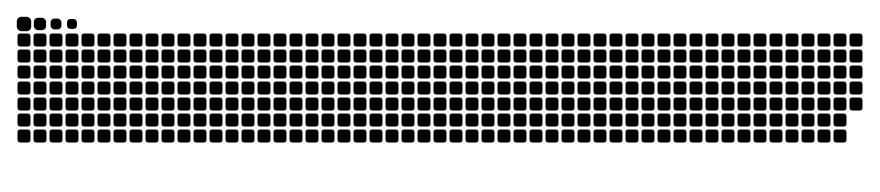
Every contribution represents another iteration of the engineering process.
| Track | Focus |
|---|---|
| Django | Business platforms, admin systems, application architecture, automation and integrations |
| WordPress | Plugin/theme engineering, reusable architecture, WooCommerce and CMS customization |
| Frontend | Tailwind CSS, responsive systems, interaction quality and design implementation |
| Engineering Systems | Standards, testing, CI, documentation and repeatable development workflows |
| Product Engineering | Building software around real business processes rather than isolated technical features |
- Business-first thinking: technical decisions are connected to actual workflows and operational needs.
- Maintainable systems: the objective is not only delivery, but a codebase that can continue evolving.
- Clear communication: requirements, constraints and implementation decisions should remain understandable.
- Attention to detail: backend behavior and frontend experience are treated as parts of the same product.
- Long-term ownership: architecture, documentation, debugging and future changes matter alongside the initial release.
Great software should be clear enough to understand, structured enough to evolve, and polished enough to trust.
I aim to build where engineering discipline, product thinking, and visual quality meet.


